For natural quartz, 99.9999% (6N) is widely recognized in the industry as the practical physical upper limit of purification processes. This is not due to inadequate technology, but because of the inherent physical and chemical nature of the quartz mineral itself. In short, “the raw material’s endowment determines its theoretical purity ceiling.”
Purification is essentially “separation,” but some impurities in natural quartz are so tightly bound to the crystal lattice that, with current technological and economic means, they cannot be completely removed without destroying the quartz host. These “stubborn” impurities exist mainly in two forms:
⚛️ Lattice Impurities – “Embedded in the Bone”
This is the primary barrier and the fundamental reason for the 6N limit.
- What are lattice impurities? During the formation of quartz (SiO₂) crystals, impurity ions that are similar in size and chemical properties to silicon ions (Si⁴⁺) can “impersonate” silicon and occupy its lattice positions. This is like replacing a few bricks in a solid wall with bricks of slightly different color and texture – they become an inseparable part of the structure.
- The most common “intruder”: Aluminum (Al³⁺). Aluminum is the most prevalent and abundant impurity ion in the quartz lattice. When Al³⁺ replaces Si⁴⁺, it disrupts the charge balance. To maintain stability, the lattice is forced to introduce charge-compensating ions such as lithium (Li⁺), sodium (Na⁺), potassium (K⁺), and hydrogen (H⁺). This means impurities appear as a “package deal”, making removal exponentially more difficult.
- How to deal with them? Conventional physical methods (e.g., magnetic separation, flotation) are powerless against lattice impurities. Even extreme chemical approaches like high‑temperature chlorination roasting can only remove part of them, never completely.
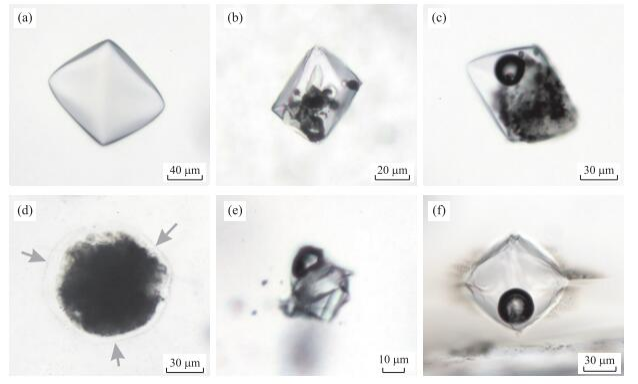
💧 Fluid Inclusions – “Sealed Inside the Body”
This is another category of impurities that is extremely difficult to eliminate.
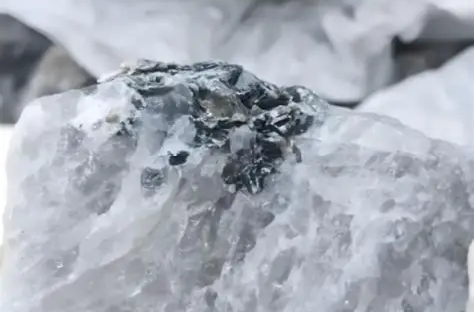
- What are fluid inclusions? During quartz growth, the surrounding ore‑forming solutions or gases can be “encapsulated” inside the crystal, forming micrometer‑sized bubbles or droplets. These inclusions act as tiny “impurity warehouses” within the quartz, containing H₂O, CO₂, and various metal ions.
- Why are they hard to remove? In particular, primary inclusions form simultaneously with the quartz crystal and are deeply buried inside. Grinding the quartz to a fine enough size to expose them would destroy the required particle size; high‑temperature treatment can burst some inclusions, but the released impurities and moisture may introduce new contamination.
🧱 Other Obstacles
- Mineral inclusions: These are independent mineral grains (e.g., rutile, zircon) trapped inside the quartz. Among them, sub‑micrometer‑sized particles (<1 μm) are extremely difficult to separate by conventional crushing and beneficiation because they are tightly enclosed by quartz.
💎 Conclusion: Why 6N?
Theoretically, to remove all lattice impurities and nano‑scale inclusions, the only way is to completely destroy and reconstruct the quartz lattice – but that is no longer “purification,” it is “synthesis.”
Therefore, for natural quartz, purification has an endpoint dictated by physical laws. A 6N purity means total impurities are below 10 ppm (parts per million). Under current technical and economic conditions, further reducing impurities approaches a relative purification processing limit.
To surpass the 6N barrier, an alternative path must be taken – synthetic quartz. By directly “growing” quartz via chemical vapor deposition (CVD) or similar methods, the impurity issues inherent to natural minerals are avoided altogether. This is precisely why all 7N and higher ultra‑high‑purity quartz products are synthetic.
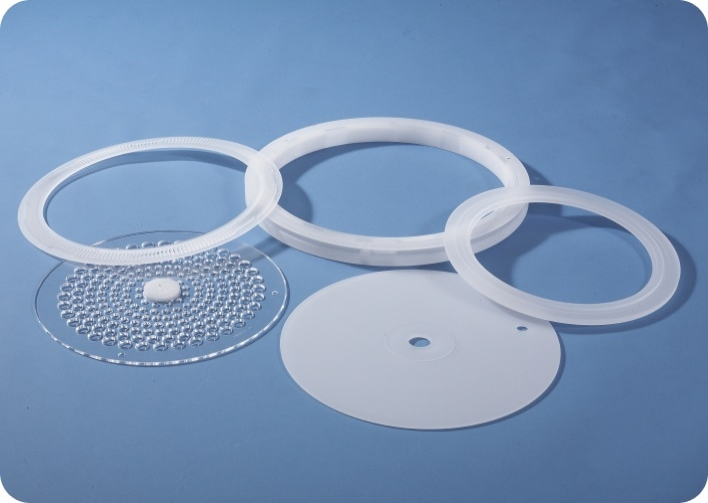
Jingge Semiconductor is a professional custom fabricator of high‑purity quartz materials and devices, offering products in JGS1/JGS2/JGS3 specifications, such as quartz boules, quartz tubes, quartz components, quartz etching rings, quartz wafers, quartz optical lenses, and optical quartz sheets, among others.