Whether a single‑crystal silicon showerhead (gas distribution plate) requires surface polishing depends on a multi‑factor trade‑off involving process node, material properties, cost‑effectiveness, and usage condition – for advanced nodes (7nm and below), where surface quality requirements are extremely stringent, precision polishing is essentially mandatory; while for mature nodes, if the surface already meets basic process requirements, alternatives such as precision cleaning or chemical etching can be used to control costs.
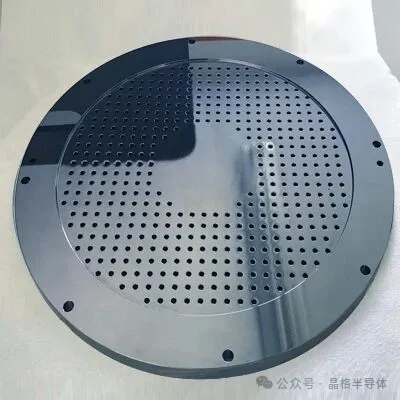
❓ What Is a Single‑Crystal Silicon Showerhead and Why Does Surface Quality Matter?
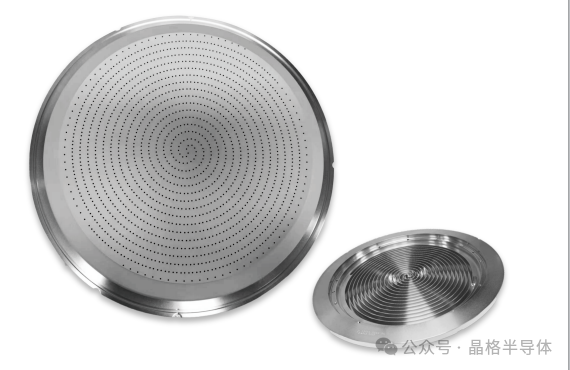
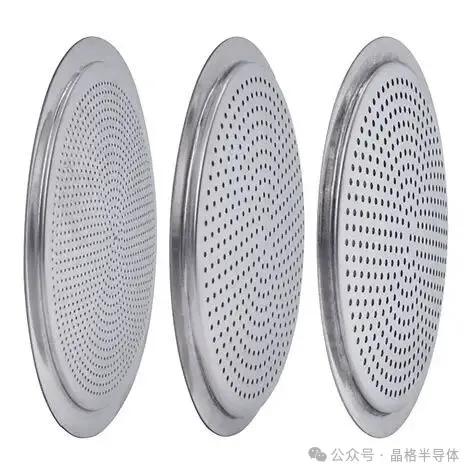
Answer: The showerhead (gas distribution plate) is the core gas distribution component in plasma etchers and CVD equipment. During wafer processing, process gases pass through the dense micro‑hole array on the showerhead surface and are uniformly delivered onto the wafer. Its performance directly determines thin‑film deposition uniformity, etching precision, and chip yield.
A single showerhead can cost over $60,000 (approximately 400,000 RMB) . One of the key drivers of this high cost is the extreme demand for surface quality – especially on the working surface facing the wafer, where surface smoothness, cleanliness, and flatness directly affect particle control and process stability in the reaction chamber.
However, surface polishing is not an obligatory step – some single‑crystal silicon showerheads require precision surface polishing, while others can be used as‑is without polishing. This difference is a systematic decision based on material properties, application scenarios, process nodes, and cost‑effectiveness.
❓ What Are the Core Objectives of Surface Polishing?
Answer: The fundamental purpose of polishing the surface of a single‑crystal silicon showerhead is to upgrade it from an “as‑machined surface” to a “process‑ready clean surface.” It is important to note that surface polishing focuses on the planar working area of the showerhead, not the hole interiors.
Objective 1: Remove Machining‑Induced Damage Layer
After wire cutting, grinding, and other mechanical processing, single‑crystal silicon showerheads inevitably develop micro‑cracks, scratches, and residual stress layers on the surface. These micro‑defects can become particle release sources in plasma environments or cause local electric field non‑uniformities.
Precision surface polishing removes this damaged layer, yielding a smooth, intact surface that reduces particle generation. For advanced nodes, surface roughness is typically required to be Ra ≤ 0.2 μm.
Objective 2: Reduce Particle Contamination Risk
Particle contamination is the number‑one killer of yield in semiconductor manufacturing. The working surface of the showerhead faces the wafer directly; rough areas easily become sites for particle adhesion or release. Under plasma bombardment, rough surfaces are more prone to shedding particles, directly contaminating the wafer surface.
Surface polishing removes non‑uniform regions and significantly reduces particle contamination risk. A smooth surface wears in a more controlled manner under plasma exposure, minimising particle generation.
Objective 3: Shorten the “Conditioning” Time
Before a new showerhead is first used, it typically requires over 100 hours of RF (radio frequency) conditioning in the reaction chamber to bring particle counts down to acceptable levels.
A showerhead with a precision‑polished surface has fewer sites for particle attachment, thus significantly reducing this time‑ and energy‑consuming conditioning process and lowering production costs.
Objective 4: Repair Damaged Surfaces After Use
For used single‑crystal silicon showerheads, prolonged plasma exposure gradually erodes and roughens the surface, sometimes forming “black silicon” – a nano‑scale needle‑like structure caused by ion bombardment that dramatically increases particle release risk.
Through surface polishing rework, this damaged layer can be removed, allowing the showerhead to be refurbished and reused multiple times, substantially reducing consumable costs.
❓ Why Do Some Showerheads Not Require Surface Polishing?
Answer: Not all single‑crystal silicon showerheads need surface polishing. The decision depends on several key factors.
Factor 1: Process Node (Most Important)
This is the primary deciding factor.
Advanced nodes (7nm and below) impose extremely stringent surface quality requirements. Wafer‑level film thickness uniformity must be controlled within ±0.1 nm; any minor surface contamination or roughness anomaly can scrap the entire wafer. Therefore, precision surface polishing is virtually mandatory for these nodes.
For mature nodes (e.g., 90nm, 130nm and above) , sensitivity to particles and surface defects is relatively lower. As long as the showerhead’s machined surface meets basic process cleanliness requirements, it can be used without polishing, effectively controlling costs.
Factor 2: Machining Accuracy
If, after cutting and grinding, the working surface roughness already meets design specifications and the surface is free of scratches and contamination, no additional polishing is needed. In such cases, only precision cleaning is required to remove residual particles from machining.
Factor 3: Cost‑Effectiveness Trade‑off
Surface polishing is a time‑consuming and expensive process. It typically involves multiple passes with diamond polishing pads of different grit sizes (e.g., 140, 220, 280, 360, 800, 1350 grit), at rotational speeds of 40–160 rpm, taking anywhere from several hours to tens of hours depending on the extent of surface damage.
For relatively lower‑cost single‑crystal silicon showerheads (market price around $12,000–13,000 USD / 80,000–90,000 RMB), full polishing on every unit would drive costs significantly higher. Hence, omitting polishing when process requirements permit is a rational cost‑control measure.
Factor 4: Usage State
| Usage State | Surface Polishing Decision |
|---|---|
| New, surface meets specs | No polishing needed; only precision cleaning |
| New, with minor scratches/damage | Surface polishing required for repair |
| Used, mild surface erosion | Optional light surface polishing for refurbishment |
| Used, severe black silicon/damage | Begin with coarse pads for full rework |
| Used, surface still acceptable | Cleaning only, no polishing |
❓ What Are the Alternatives When Surface Polishing Is Omitted?
Answer: For single‑crystal silicon showerheads that do not require polishing, other surface treatment methods can meet process cleanliness requirements.
Alternative 1: Precision Cleaning
Using ultrasonic cleaning, deionised water rinsing, or RCA standard cleaning to remove surface contaminants and particles is sufficient for general process cleanliness requirements. This is the most basic surface treatment.
Alternative 2: Chemical Etching
A mild etch using chemical solutions (e.g., HF + HNO₃ mixed acid) can remove the machining‑induced damage layer and improve surface condition without mechanical polishing. This is suitable for applications where surface roughness requirements are less stringent.
Alternative 3: Surface Coating
Using ALD (atomic layer deposition) or PECVD to deposit functional coatings such as aluminium oxide (Al₂O₃) or silicon nitride (Si₃N₄) on the working surface can provide a smoother finish while also enhancing plasma erosion resistance and chemical stability.
Article source: Jingge Semiconductor — Supplies ultra‑large‑size single‑crystal silicon materials and polycrystalline columnar‑grained silicon materials. Our products are specifically designed for the processing of silicon components used in semiconductor etching applications, including single‑crystal silicon rings, single‑crystal silicon wafers, columnar‑grained silicon rings, and polycrystalline silicon wafers, with diameters up to 650 mm.