
⚡ One-Sentence Core Conclusion
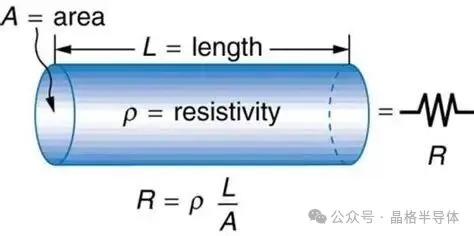
Resistivity is an intrinsic property of the material itself; resistance is the actual behavior of a specific part. In silicon, resistivity depends mainly on the type and concentration of dopants, while resistance also depends on length and cross-sectional area: R = ρ × L / A.
📊 Quick Comparison: Resistivity vs. Resistance
| Dimension | Resistivity | Resistance |
|---|---|---|
| English term | Resistivity | Resistance |
| Symbol | ρ | R |
| Unit | Ω·cm3 | Ω |
| Definition | How strongly the material itself opposes current | How strongly a specific part opposes current |
| Depends on | Dopant type, dopant concentration | Material, length, cross-sectional area |
| Formula | Intrinsic property | R = ρ × L / A |
| Shape-dependent? | No, for the same material | Yes |
| Analogy | Speed limit | Actual travel time |
❓ What Is Resistivity?
Answer: Resistivity, symbol ρ, is a measure of how strongly a material itself opposes electric current. Its unit is typically Ω·cm.
For silicon, resistivity depends mainly on two factors:
- What dopant is added — boron gives P-type silicon; phosphorus gives N-type silicon.
- How much dopant is added — more dopant means more conductive carriers, and therefore lower resistivity.
Pure silicon without doping is almost an insulator. Once doped, it becomes a controllable semiconductor.
Key point: Resistivity is silicon’s “innate constitution.” For the same silicon material, no matter how long, how thick, or what shape you cut it into, the resistivity remains unchanged.
❓ What Is Resistance?
Answer: Resistance, symbol R, describes how strongly a specific part opposes electric current. Its unit is Ω.
Resistance depends not only on the material but also on geometry and size:
Resistance = Resistivity × Length ÷ Cross-sectional Area
Therefore:
- For the same material, longer means higher resistance.
- For the same material, thinner means higher resistance.
- For the same material, making it into a hollow ring changes the resistance again.
But no matter how the shape changes, the resistivity remains the same.
❓ What Is the Highway Analogy?
Answer: Resistivity is like the speed limit of a highway. The lower the speed limit, the slower cars travel. This is an intrinsic setting of the road and has nothing to do with how long the road is.
Resistance is like the actual time you spend driving a section of that road.
- The longer the road, the more time you spend.
- The fewer lanes, the worse the traffic, and the more time you spend.
So the speed limit may be the same, but the actual driving difficulty of each section differs.
Resistivity = speed limit standard; Resistance = your actual travel time.
❓ Why Is Resistivity Uniformity Important?
Answer: For ordinary parts, looking only at the resistivity range may be enough. But for silicon components in semiconductor etching equipment — such as silicon electrodes, silicon rings, and showerheads — resistivity uniformity is even more important than the absolute value.
Why?
If one side of a silicon material has high resistivity and another side has low resistivity, the RF current will distribute unevenly, the plasma will become non-uniform, and the final wafer etching result will be affected.
Therefore, high-end silicon components usually require:
- The resistivity range must meet specifications.
- Both radial and axial uniformity must also meet specifications.
💎 Summary
| Concept | One-Sentence Memory |
|---|---|
| Resistivity | The material’s innate ability; same material, same resistivity |
| Resistance | The specific part’s actual behavior; depends on length, area, and shape |
| Relationship | R = ρ × L / A |
| Highway analogy | Resistivity = speed limit; Resistance = actual travel time |
| Silicon components | Resistivity uniformity is critical for RF current, plasma uniformity, and wafer etching |
Final takeaway: Resistivity is the material’s “innate constitution”; resistance is the part’s “actual performance.” For advanced silicon components, uniformity of resistivity is often more important than the absolute value.
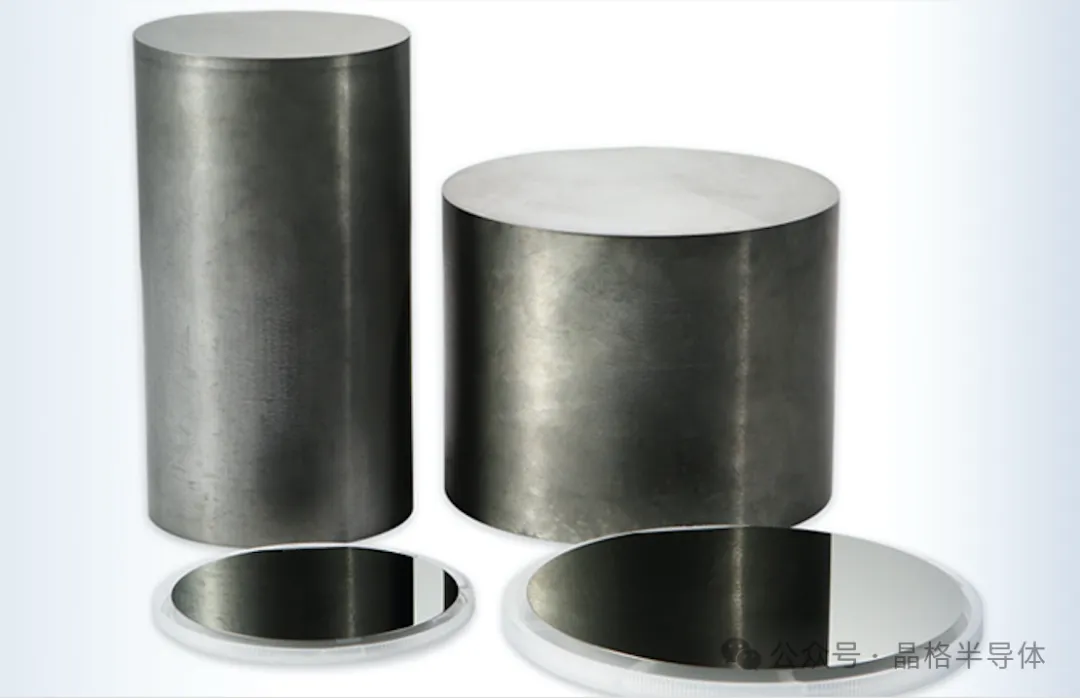
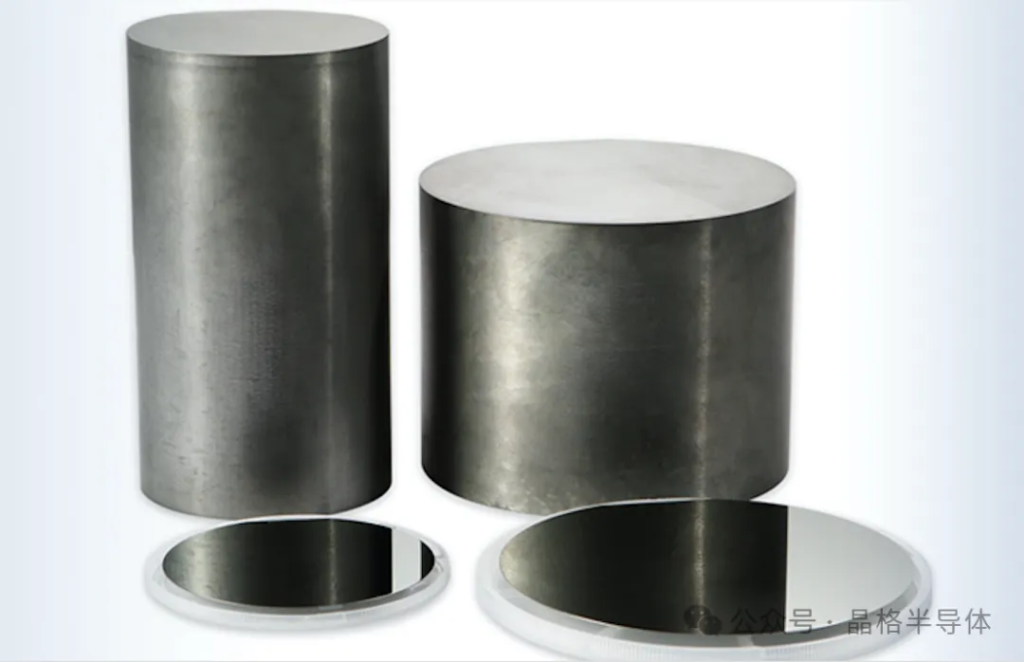
Article source: Jingge Semiconductor — Supplies ultra‑large‑size single‑crystal silicon materials and polycrystalline columnar‑grained silicon materials. Our products are specifically designed for the processing of silicon components used in semiconductor etching applications, including single‑crystal silicon rings, single‑crystal silicon wafers, columnar‑grained silicon rings, and polycrystalline silicon wafers, with diameters up to 650 mm.