If you spend any time in the PECVD area of a semiconductor fab, you will often hear engineers mention the word “showerhead.” What exactly is it? What does it look like? What does it do? And why is it so important?
I. What Is It and What Does It Look Like?
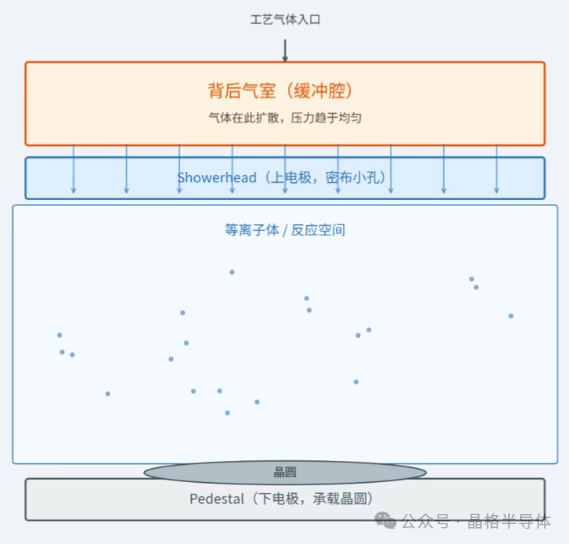
The name says it all—a showerhead works much like the one in your bathroom. In a PECVD chamber, the showerhead is the upper electrode. The chamber’s core structure consists of two parallel electrodes—one on top and one on the bottom (the bottom one is called the pedestal, which holds the wafer), with the plasma reaction space in between.
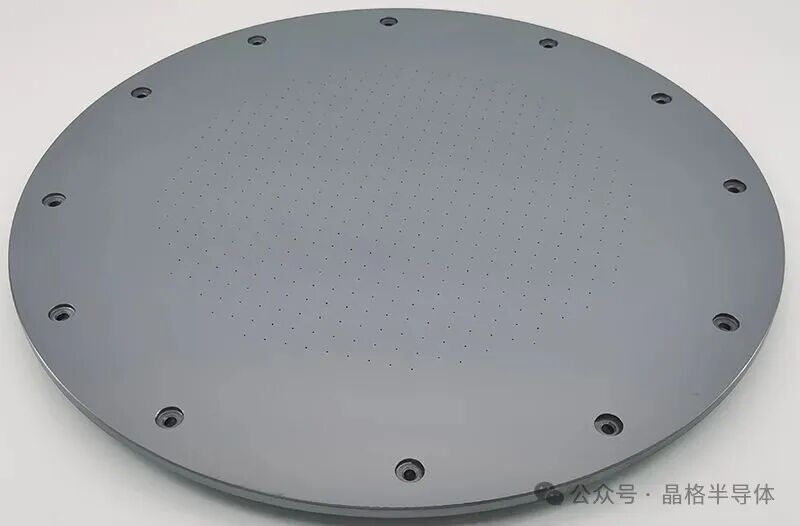
But the showerhead is not a solid plate. It is a component with a gas distribution structure:
- On the back side: there is a gas plenum (sometimes called a Gas Box and Blocker Plate), where process gases first enter.
- On the front side: it is covered with hundreds or thousands of small holes, through which the gas is sprayed evenly into the reaction chamber below.
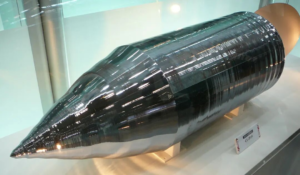
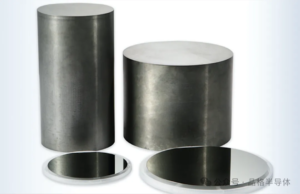
The showerhead is typically made of single-crystal silicon or anodized aluminum—a conductive material that resists plasma corrosion. It must withstand corrosion and conduct electricity—two requirements that together hint that it is much more than a simple “gas distributor”.
II. It Does Two Jobs at Once—This Is the Key
To understand the showerhead, the most important point is this: it plays two roles simultaneously.
Role One: Gas Distributor
All process gases must pass through the showerhead to enter the reaction space. Without a showerhead, gas would shoot directly into the chamber from one or two inlets—resulting in extremely high gas concentration near the inlets and almost no gas replenishment far from them. The film deposited on the wafer surface would be highly non-uniform in thickness.
What the showerhead does is turn “a few gas inlets” into “hundreds or thousands of gas outlet points“.
Role Two: RF Electrode
PECVD uses a CCP (capacitively coupled plasma) structure, which requires an alternating electric field between the two electrodes to generate plasma. The showerhead is the upper electrode. The electric field accelerates electrons, and the electrons collide with gas molecules to produce free radicals—this process occurs in the space between the showerhead and the pedestal.
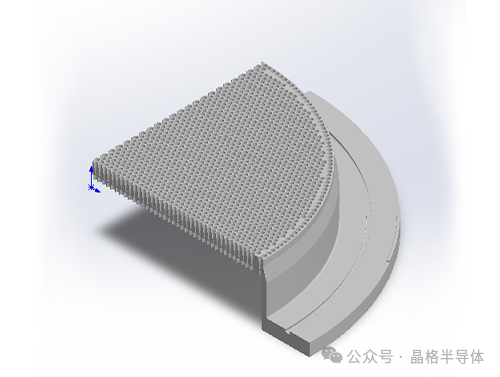
In one sentence: the showerhead is both the “door” through which gas enters the reaction space and the “electrode” that provides the electric field needed to generate plasma. These two roles are combined in a single component—this is the core premise for understanding why it is designed with such complexity.
III. Why So Many Holes Instead of One Large Opening?
This is the simplest but most fundamental question for understanding the showerhead.
If the showerhead were just a plate with a few large holes, the gas would rush out through the path of least resistance first. The result: some areas would have strong gas flow, while others would get almost no gas replenishment.
The dense array of small holes serves to “equalize the flow”. The entire process can be understood as follows:
Gas enters the plenum on the back side (a relatively enclosed buffer space) ↓ The pressure inside the plenum becomes uniform (the gas has space to diffuse and mix) ↓ The gas is sprayed downward through a large number of small holes ↓ Each small hole creates a certain resistance to the gas flow (flow-limiting effect) ↓ Even if there are minor pressure non-uniformities inside the plenum, after passing through so many “flow-limiting holes,” the distribution of the sprayed gas is smoothed out and homogenized
Here is another way to think about it: the more holes there are, and the denser they are, the more the gas is “broken up” into independent small streams. The local anomaly of any single stream has less impact on the overall distribution.
Core insight: the holes are there to “break the gas up evenly“—this is the source of gas uniformity.
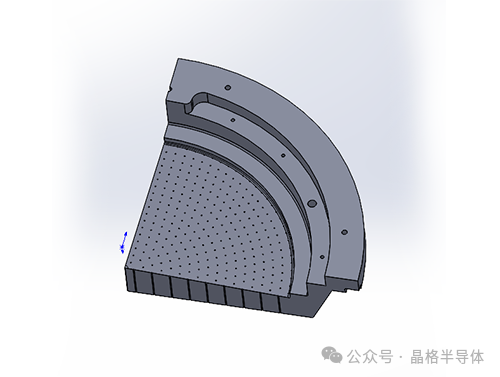
IV. Holes Can Get Clogged—Why the Showerhead Needs Regular Maintenance
The showerhead operates in a process environment for extended periods. Process gases not only deposit films on the wafer surface—they also deposit on all surfaces exposed to the plasma—including the side of the showerhead facing the reaction space and the inner walls of the holes.
The clogging process:
During normal operation, a thin layer of deposit gradually builds up on the inner walls of the holes ↓ As the number of wafers processed increases, the deposit grows thicker ↓ The effective diameter of the hole channel gradually shrinks ↓ The actual gas flow through that hole gradually decreases ↓ The gas supply to the area directly below is reduced
This is why the showerhead requires regular maintenance—cleaning or, when it reaches the end of its service life, complete replacement. When engineers perform maintenance, what they need to check is precisely whether the holes are clear, whether there are obvious signs of deposit clogging, and whether the showerhead is installed level and in place.
V. What Traces Does a Failing Showerhead Leave in Process Data?
Now that we understand the structure and aging mechanism of the showerhead, the final piece of knowledge to establish is: when it fails, how will the process data behave?
Particles: When the deposits on the inner walls of the holes reach a certain thickness, they may flake off and become a source of particle contamination. If the particle count shows a trend of increase, and the particle distribution is regularly concentrated in a certain area, the hole condition at that corresponding location is worth suspecting.
Uniformity (Wafer Map): Local hole clogging → reduced gas supply to the corresponding area below → the film thickness in that area may be thinner, appearing on the Wafer Map as an isolated local anomaly (rather than a global center/edge difference).
Here is a very practical diagnostic intuition:
| Anomaly Pattern | Possible Cause |
|---|---|
| Isolated local anomaly | Suspect the showerhead (local hole clogging) |
| Large-scale regular center/edge difference | Suspect other factors such as gap |
Yangzhou Jingge Semiconductor supplies high-purity silicon powder with D50 in the micron range, suitable for ceramics, lithium batteries, etc., with a purity of 99.9999%. For cooperation, please call: 17826693981.